Family caregivers often lift and move a loved one many times a day. Over weeks and months, manual transfers take a real toll on backs, shoulders, and energy, and a single slip can injure both people. A patient lift changes that.
Why Manual Lifting Is Risky
Lifting an adult who cannot bear weight means bending, twisting, and holding a heavy, shifting load, which is exactly the kind of motion that leads to back injuries. Rushed or awkward transfers also raise the chance of a fall for the person being moved.
How a Lift Helps
- The motor does the lifting. The caregiver guides the transfer instead of carrying the weight.
- Safer, steadier transfers. The person is supported in a sling the whole time, which reduces the risk of falls.
- More dignity and comfort. Smooth, controlled movement is less frightening and less painful than being pulled or carried.
- One-person care. Many transfers that needed two people can be handled safely by one trained caregiver.
- Staying at home longer. When transfers are manageable, families can often keep caring for a loved one at home.
Tips for Safe Use
- Use the sling size and style recommended for the person.
- Check slings and straps regularly for wear.
- Keep the path clear and lock wheelchair and bed brakes before a transfer.
- Get hands-on training when the lift is set up.
Types of Patient Lifts
- Hydraulic mobile lifts are pumped by hand. They’re affordable and need no charging. Examples include the Hoyer HML400 and Invacare 9805P.
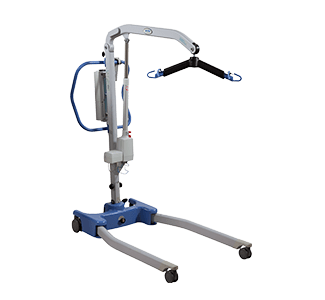
- Electric mobile lifts raise and lower at the push of a button, which saves caregiver effort, like the Hoyer Advance-E and Invacare Reliant 450.
- Sit-to-stand lifts help people who can bear some weight rise from sitting, such as the Hoyer Journey.
- Ceiling and gantry lifts run on an overhead track for the smoothest, lowest-effort transfers. See what to know before installing a ceiling lift.
Browse all options on our patient lifts and sit-to-stands page.
Signs It’s Time for a Lift
- Transfers need two people, or one person is straining to manage alone.
- The caregiver has back, shoulder or wrist pain after transfers.
- There’s been a fall or near-fall during a transfer.
- The person being moved is anxious or in pain during transfers.
- A doctor or therapist has said the person shouldn’t bear weight.
Frequently Asked Questions
Can one caregiver use a patient lift alone?
Many home transfers can be done safely by one trained caregiver, but follow the manufacturer’s instructions and the advice of your care team for the person’s situation.
Does Medicare cover patient lifts?
Medicare Part B may cover a patient lift when transfers between bed and chair, wheelchair or commode are needed and the person would otherwise be confined to bed. Coverage requires a doctor’s order and a Medicare-enrolled supplier.
Hydraulic or electric?
Hydraulic lifts cost less and never need charging. Electric lifts take less effort and are better for frequent transfers or caregivers with limited strength.
Mobility Equipment of Lexington helps families choose, install, and learn to use ceiling, gantry, and mobile patient lifts. Explore our patient lifts, see ceiling lifts vs. Hoyer lifts, or call 859-523-0993.